
Psychologist Report for Court: What Solicitors Should Expect
Key Takeaways
- Facial mapping usually refers to forensic facial image comparison, not database facial recognition.
- It can assist where identity is disputed, but courts assess necessity and reliability and may expect the tribunal of fact to compare images where possible.
- Image quality often determines evidential weight. Low resolution, compression and poor angles can make a meaningful comparison impossible.
- If enhancement is used, it must be repeatable and transparent, and both original and enhanced imagery should be available.
- Conclusions should be expressed cautiously using support scales, not population probabilities, and the final decision remains with the court.
- Strong instructions focus on the competing propositions, secure original files early, and confirm competence, method, validation, and peer review.
When CCTV is central to a case, and identity is disputed, parties often ask whether facial mapping can settle the question. Sometimes it can help, but courts treat facial comparison evidence cautiously. The value depends on image quality, whether a structured method was used, and whether conclusions are expressed with the right level of restraint.
This guide has been compiled by our experts to answer the following questions: What is facial mapping? How is facial mapping used in legal cases in the UK? It also sets out what courts and prosecutors consider, what a proper forensic process looks like, and where the limits sit.
What Is Facial Mapping and How Is It Different from Facial Recognition?
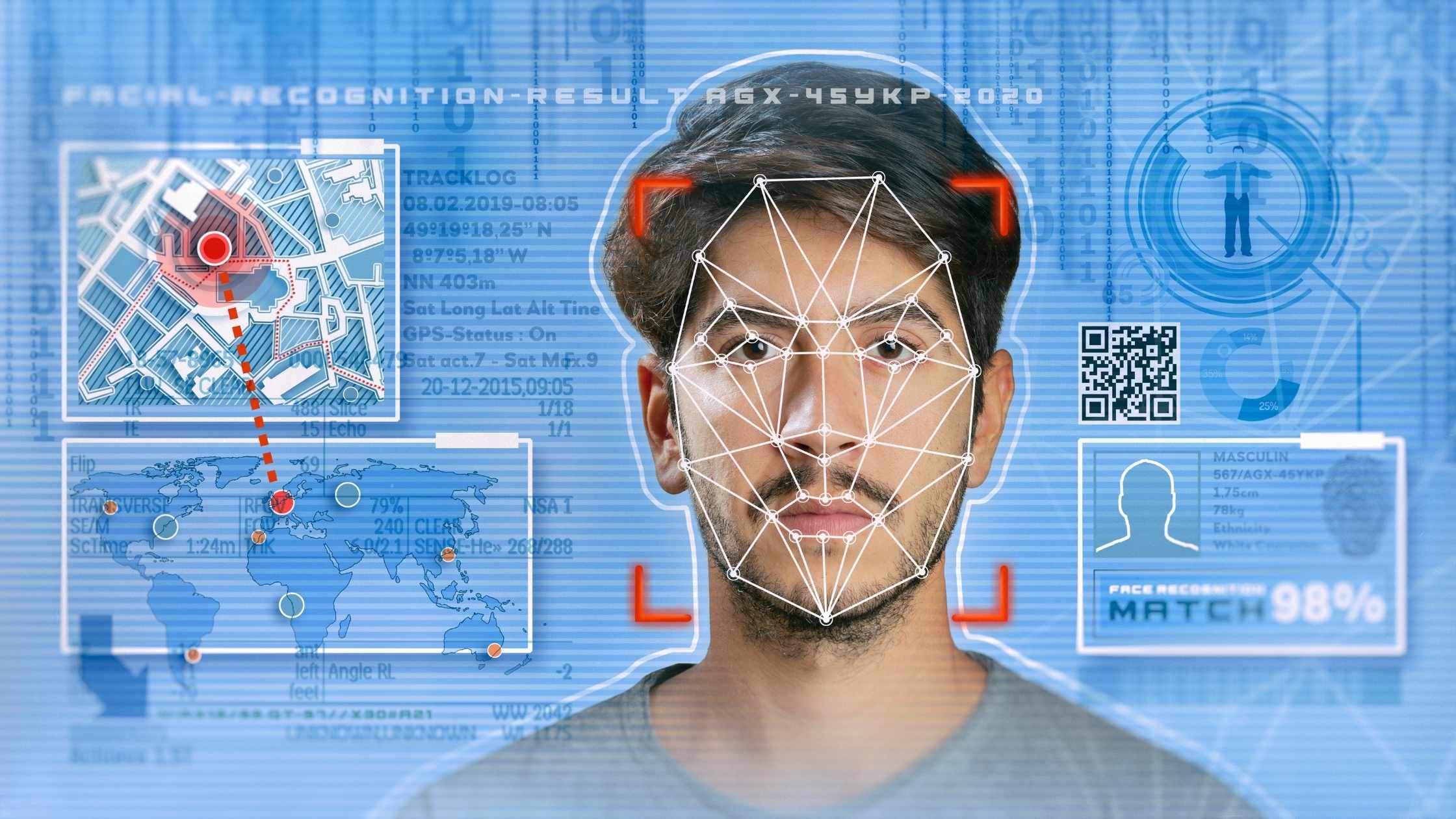
In UK forensic practice, facial mapping is a commonly used label, but it usually refers to facial image comparison: comparing an unknown face in CCTV or a still image with a known image (often a custody photograph) to assess similarity or dissimilarity.
The Forensic Science Regulator’s image comparison guidance describes facial image comparison as colloquially known as ‘facial mapping’ and distinguishes it from facial recognition, which is matching a face to a database (often with software).
What is Facial Mapping in Plain Terms?
- It is not finding a match like a fingerprint database search.
- It is an expert comparison exercise, where the aim is to help the court understand observed similarities and differences, and how much support those observations lend to competing propositions (same person vs different person).
It also matters to understand what facial mapping is not. The CPS notes this is a relatively new area of forensic science, with no universally accepted methodology, and it states that opinions of facial identification should be treated with caution and peer reviewed.
How Is Facial Mapping Used In Legal Cases?
How facial mapping is used in legal cases usually comes down to one of three scenarios:
Disputed CCTV Identification
A party may rely on facial comparison where CCTV captures an offender’s face and the defence disputes that the suspect is the person shown. In these cases, the court may be asked to consider an expert report that highlights facial features and explains the significance of similarities or differences. CPS guidance confirms that facial mapping or imaging can be admissible to demonstrate similarities in facial characteristics, citing authority including R v Grey.
Where a Jury Cannot Fairly Compare Without Help
Sometimes the quality of the imagery means a bench or jury may struggle to form its own view. CPS guidance says the first question is whether expert opinion is necessary, because the tribunal of fact may be able to compare the images itself. If it cannot reach its own conclusion, an expert in facial mapping may be required, and case law is cited on how conclusions should be expressed.
As One Strand Of a Wider Identification Case
Even when facial mapping is served, it is often only part of the picture. The Forensic Science Regulator guidance warns that, because of uncertainty and image quality issues, facial image comparison should not be treated as primary evidence for positive identification where the imagery is low quality.
Explore Our CCTV Enhancement Service
What Courts Consider Before Facial Mapping Evidence Is Relied Upon
In criminal proceedings, expert evidence must be relevant, within the expert’s competence, and sufficiently reliable to be admitted. The Criminal Practice Directions touched upon earlier set out admissibility principles and list factors the court may consider when assessing reliability.
Necessity: Can the Court Decide Without an Expert?
CPS guidance is clear that a bench or jury may be able to compare an offender’s face in CCTV with a suspect photo without expert opinion. If the image is poor, it may also be that no meaningful comparison can be made at all, even by an expert.
Competence, Method, and Quality
The aforementioned Forensic Science Regulator guidance sets out the sort of quality standards expected of forensic image comparison work, including documented training and testing, a structured analytical process that can be repeated by another expert, validated methods (with known limitations), and peer review or verification. It also warns that simply citing years of experience is not enough.
Compliance and Disclosure Expectations
Where forensic science activities are involved, the statutory Code of Practice exists to support accurate and reliable evidence and to minimise quality failures.
Forensic science activities: statutory code of practice – version 2
Published 5 June 2025.
Separately, Criminal Procedure Rules Part 19 governs expert evidence procedure in criminal cases, including service and disclosure-related requirements.
How Facial Mapping Comparisons Are Made
A reliable facial mapping exercise is usually more than placing two images side by side.
While terminology varies, robust practice tends to follow a structured workflow:
1) Secure The Best Available Images
The Regulator’s guidance stresses that original video and images should always be used for comparison if available, because edited or converted material can reduce quality.
2) Assess Suitability Before Comparing
Image comparison can be compelling, but its strength is at least partly dependent on image quality. Where the image is insufficient, it may be unsuitable for comparison regardless of the expert’s experience.
3) Controlled Enhancement, Where Appropriate
Enhancement can help the court see what is already present in the imagery, but it should not be used to create detail. CPS guidance says that if enhancement is used, the party must be able to prove how the technique works, and the expert must be able to produce the original and enhanced versions with a repeatable explanation.
If enhancement is central to your case, this is where specialist work can be critical: CCTV Enhancement
4) Feature Comparison and Documentation
Facial mapping typically involves comparing visible features and feature combinations (for example, relative proportions, shape cues, scars or distinctive marks if visible, and stable facial structures). A key point is documentation: conclusions should be traceable back to specific observations in the images, with clear limitations where features are obscured or distorted.
Why CCTV Quality and Artefacts Often Decide the Weight
Many disputes are not really about the face. They are about the image.
Common issues include:
- Low resolution and heavy compression (which removes fine detail).
- Motion blur, low frame rate, and rolling shutter effects.
- Lighting differences and glare.
- Angle and pose differences (profile vs frontal).
- Partial occlusion (hoods, caps, masks, hair, hands).
- Lens distortion and distance from the camera.
The Regulator’s guidance includes practical warnings about compression artefacts and emphasises that poor-quality imagery limits comparison work.
A practical tip for lawyers: treat CCTV early as fragile evidence. Promptly request native exports, preserve original files, and document the chain from seizure to service. If the only available material is screen-recorded or social-media compressed, the limitations may be built in and irreversible.
How Conclusions Should Be Expressed In Court
One of the biggest courtroom risks is overstatement. CPS guidance sets out a cautious approach:
- A suitably qualified expert may explain similarities and then express the significance using a verbal scale from lends no support to lends powerful support.
- The expert should not give probabilities of occurrence of facial features in the population, because there is no statistical database for those features as compared in this context.
- The CPS also stresses that the opinion is ultimately subjective, and it is for the tribunal of fact to decide whether images match.
This matters because it keeps the evidence in the right lane: assisting the court, not replacing it.
Key Limitations and Common Misunderstandings
Facial mapping can assist, but it has known limitations, and courts expect those to be confronted.
Facial Mapping Proves Identity
It may support identification, but it rarely proves it on its own, especially where imagery is low quality. The Regulator guidance already touched on advises caution about using facial image comparison as primary evidence for positive identification when the quality is low.
Facial Mapping Is the Same as Facial Recognition
It is not. The Regulator guidance distinguishes forensic facial image comparison (facial mapping) from database matching (facial recognition).
Any Image Expert Can Give Facial Identification Opinions
CPS guidance warns that this area has no universally accepted methodology and no clear means of determining competence, and it emphasises caution and peer review. This is also why courts focus on reliability and competence under the Criminal Practice Directions framework.
Instructing a Facial Mapping Expert: Practical Questions
If you are commissioning work, these questions help you avoid wasted cost and unusable opinion:
- What is the exact question? Presence, exclusion, or degree of support for identity propositions?
- What is the best available imagery? Original exports, not screen captures or re-encoded clips.
- Is the imagery suitable for facial comparison at all? Ask for an early suitability assessment.
- What methodology will be used, and is it documented and repeatable?
- What validation or known limitations exist for that method?
- Will the work be peer reviewed or verified? CPS guidance highlights peer review expectations.
- How will conclusions be expressed? Look for scale language and avoidance of statistical claims.
- What else could strengthen or weaken the conclusion? (lighting, angles, compression, other CCTV angles, corroborative evidence)
How Facial Mapping Fits Within Wider Expert Evidence
Facial mapping rarely sits alone. It is often paired with:
- CCTV enhancement and authentication work.
- Gait, clothing, vehicle or object comparison (where appropriate).
- Mobile phone and location evidence (cell site, handset data).
- Timeline evidence (ANPR, card transactions).
If you need support beyond one discipline, Forensic Defence can coordinate expert evidence across multiple areas.
Conclusion
Facial mapping evidence can support identification in UK proceedings when it is based on suitable imagery, a structured and transparent method, and cautious conclusions that respect the limits of the science. Courts and prosecutors are alert to overreach, especially where images are poor, methods are unclear, or opinion is presented as certainty.
If CCTV identity is a live issue in your case, the best results usually come from early preservation of original footage, clear instructions focused on competing propositions, and expert reporting that is repeatable, peer-reviewed, and appropriately scaled.
Helpful Resources
- Forensic Science Regulator: Forensic Image Comparison And Interpretation Evidence: Guidance For Prosecutors And Investigators (Issue 2) (PDF).
- Crown Prosecution Service: Expert Evidence (section on Facial mapping and Video evidence).
- Criminal Practice Directions 2023 (as amended November 2025): Expert evidence admissibility and reliability factors (PDF). (Courts and Tribunals Judiciary)
- Criminal Procedure Rules 2025: Part 19 (Expert Evidence).
- Forensic Science Regulator: Forensic science activities: statutory code of practice (version 2).
- Forensic Science Regulator: Video analysis: codes of practice for forensic service providers.
Related posts


